Latest Articles
-
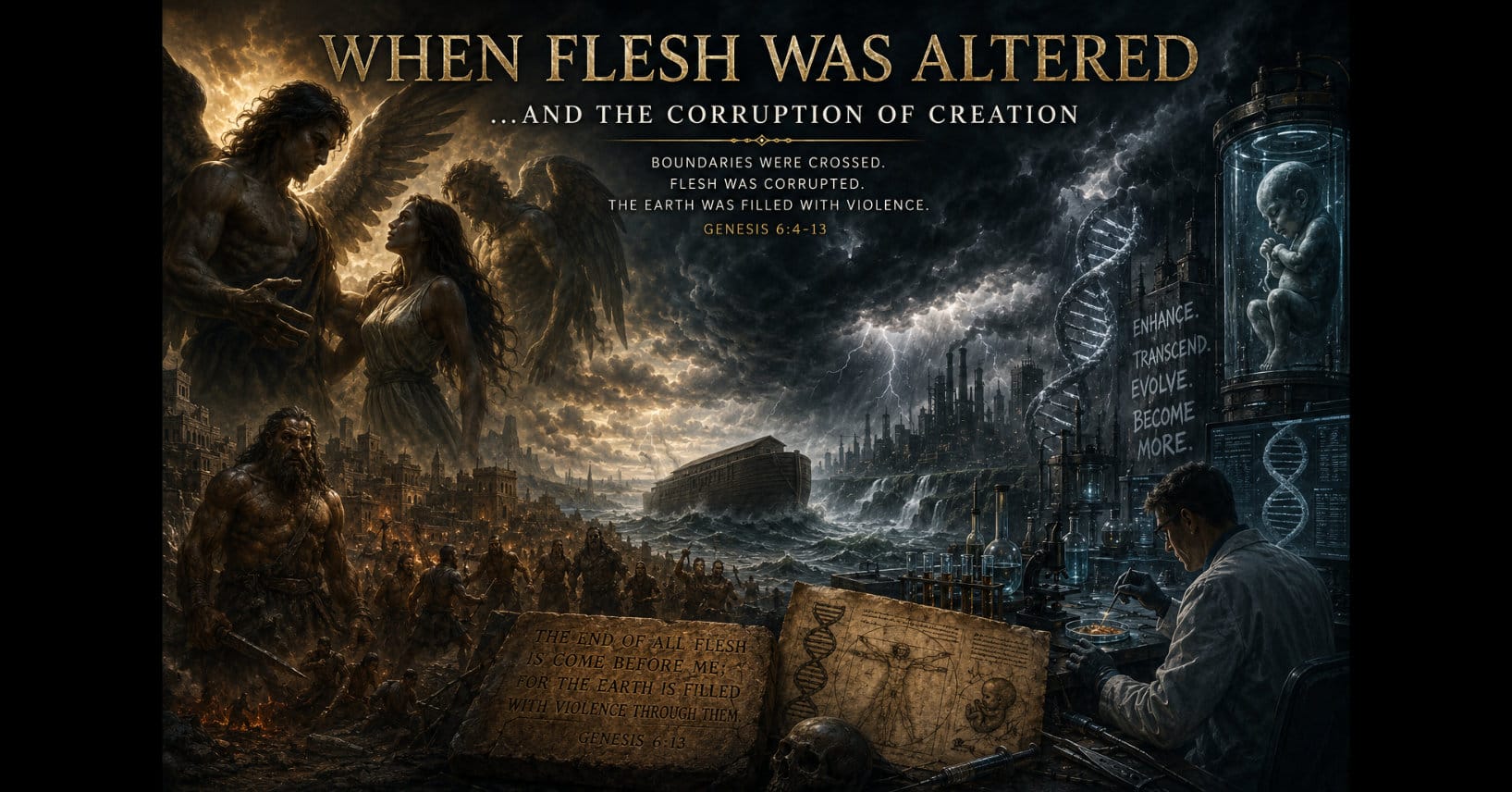
When Flesh Was Altered …And the Corruption of Creation
Did the corruption before the Flood involve more than violence and moral decay? This article examines Genesis 6, ancient traditions surrounding hybridization, and the modern implications of humanity’s growing ability to alter life itself.
-
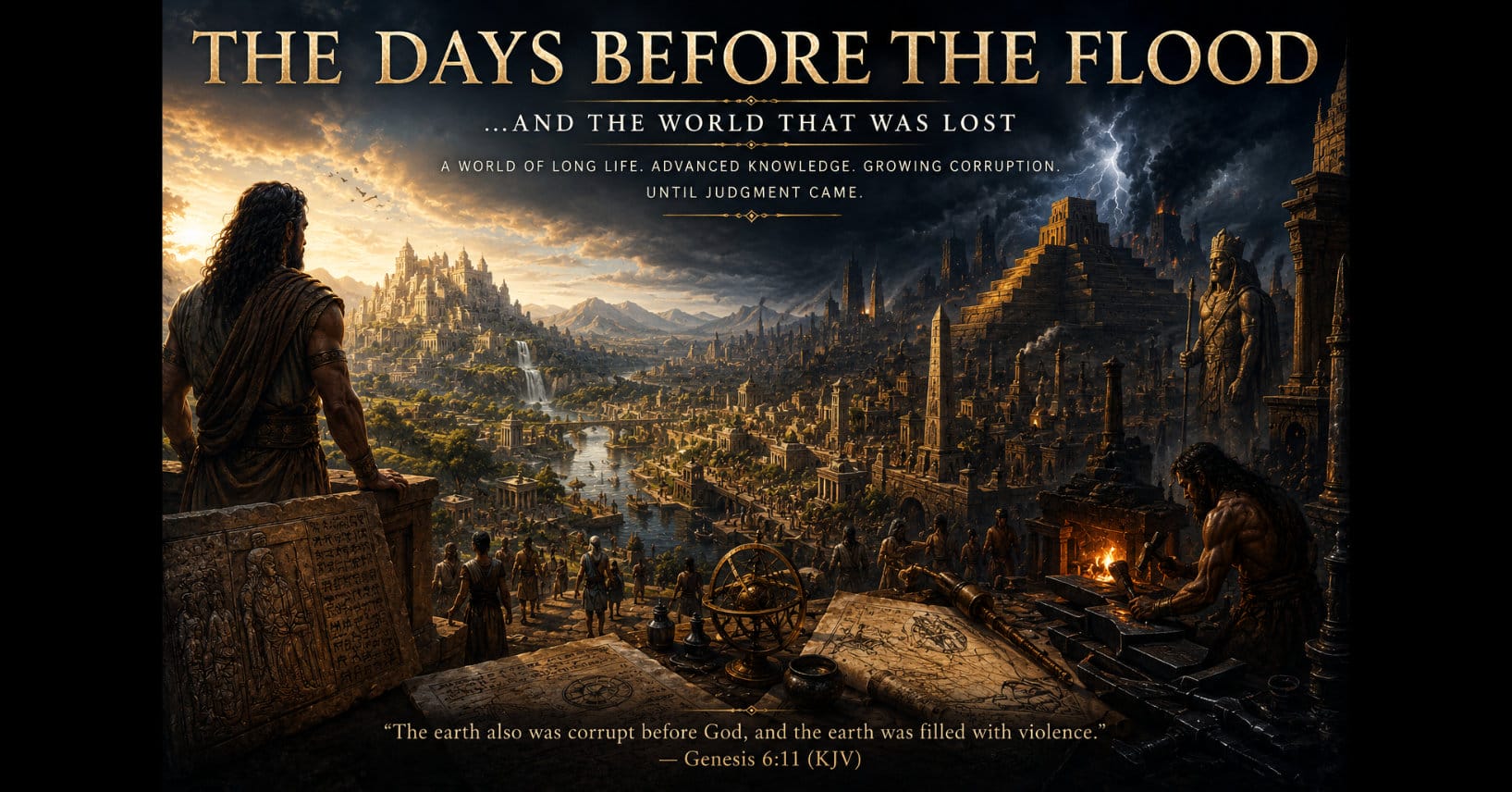
The Days Before the Flood …And the World That Was Lost
Genesis describes a world filled with violence before the Flood, but it also hints at a civilization far more sophisticated than many assume. Could centuries-long lifespans, accumulated knowledge, and advanced skills have produced a world unlike anything we imagine today?
-
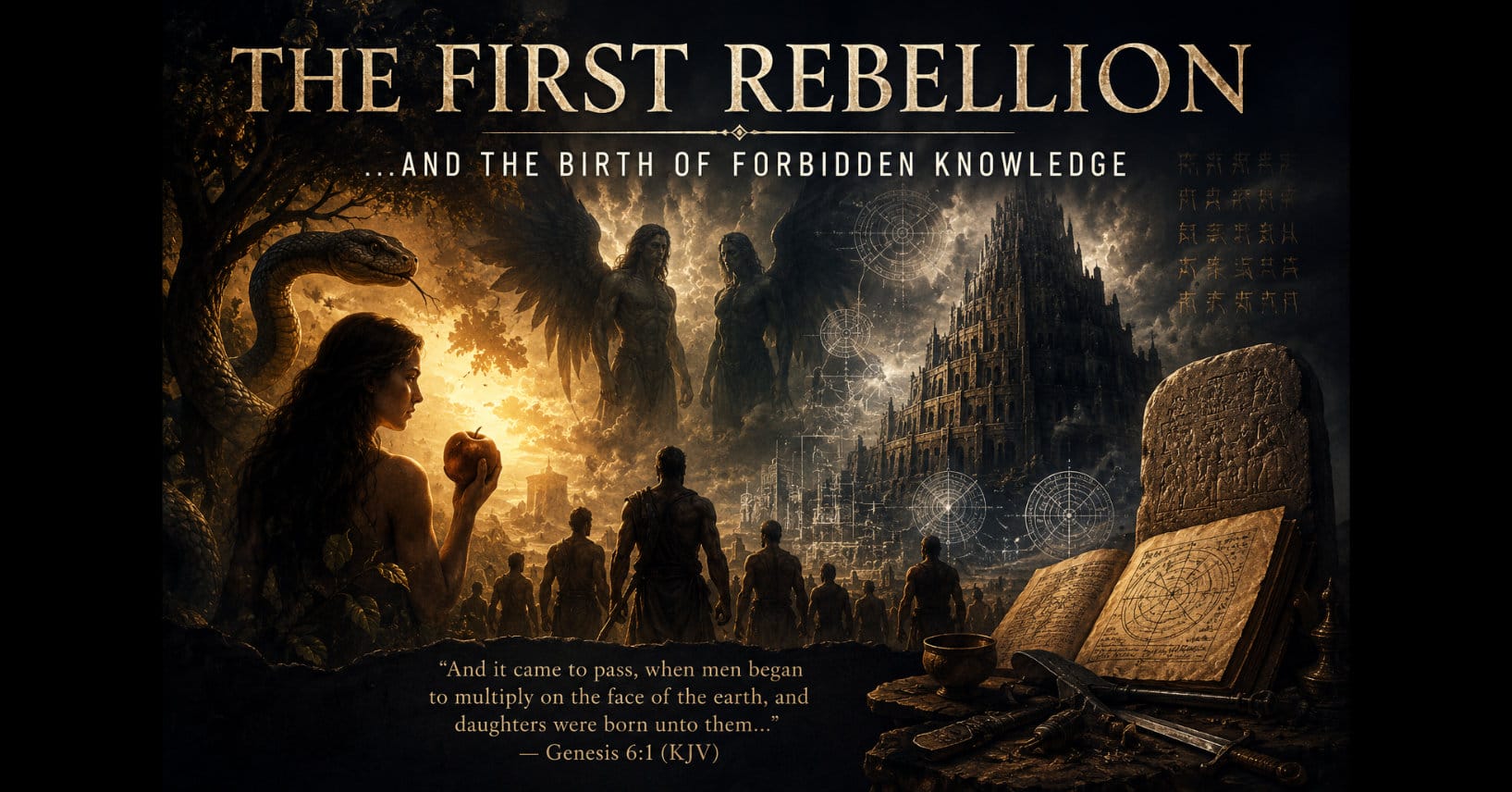
The First Rebellion …And the Birth of Forbidden Knowledge
Did humanity possess knowledge it was never meant to have? Genesis 6 introduces one of Scripture’s most mysterious passages and raises profound questions about the relationship between rebellion, knowledge, and the corruption that preceded the Flood.
-
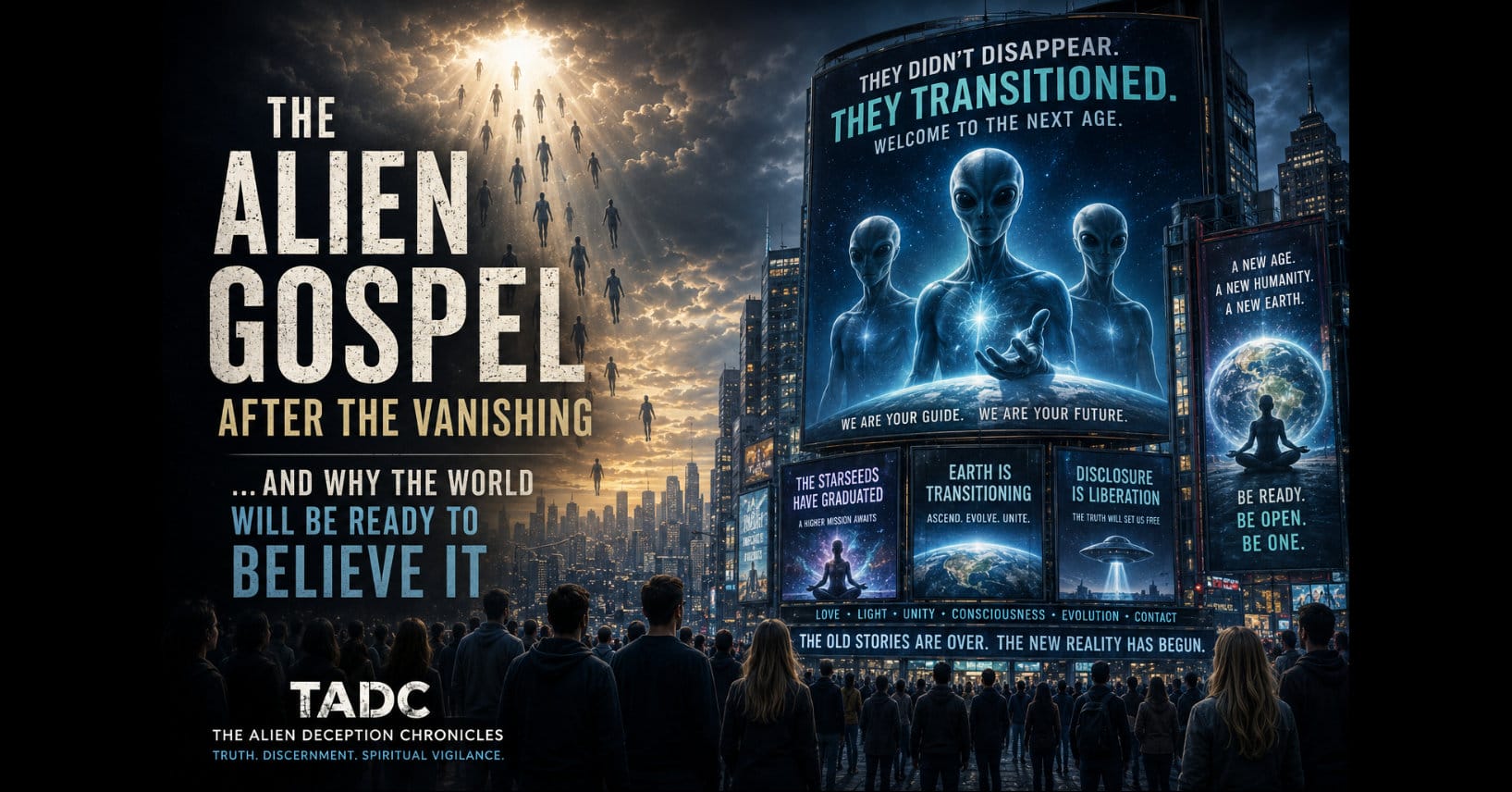
The Alien Gospel After the Vanishing …And Why the World Will Be Ready to Believe It
For decades, popular culture has conditioned humanity to look toward advanced beings, hidden knowledge, and cosmic evolution for answers. If millions suddenly disappeared, would the world turn to biblical prophecy—or embrace an alien-centered explanation already embedded within modern disclosure movements, New Age spirituality, and the growing belief in nonhuman intelligence? This article explores how an…
-
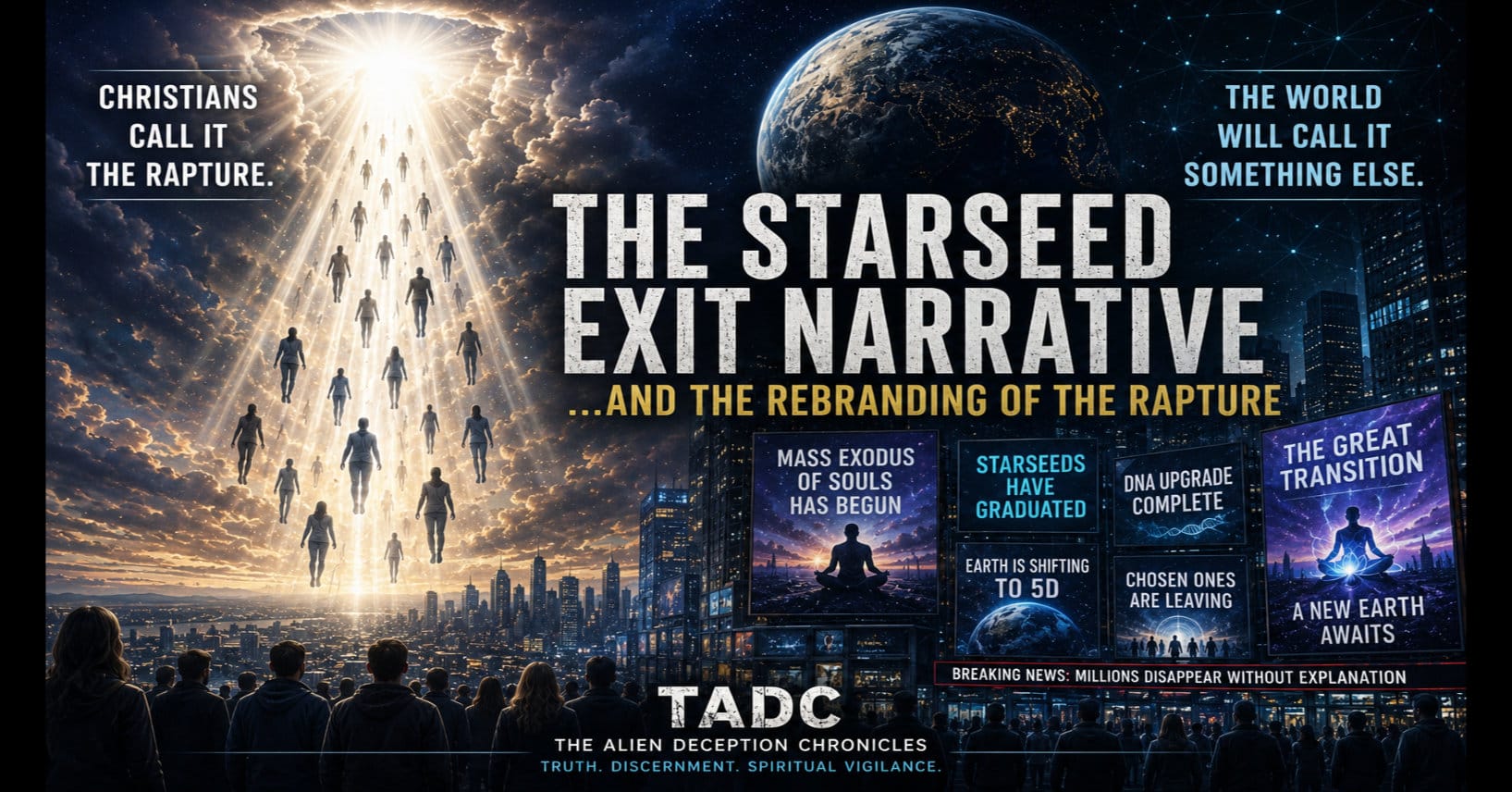
The Starseed Exit Narrative …And the Rebranding of the Rapture
Across New Age communities, discussions of a coming “mass exodus of souls” are becoming increasingly common. While these teachings resemble the biblical rapture on the surface, they replace Christ, redemption, and prophecy with consciousness, ascension, and self-directed evolution. Could such narratives become the world’s preferred explanation for an event Scripture has long foretold?
-

Meet Yara
Yara belongs to the first generation raised in a world shaped by intelligent systems, digital identities, and algorithmic guidance. What others view as revolutionary, she considers normal. But as events unfold around her, Yara begins asking questions that challenge the foundations of the world she has always known.
Follow the Signal
Subscribe to receive each new TADC article by email with a short excerpt and a direct link to read the full post on the site.