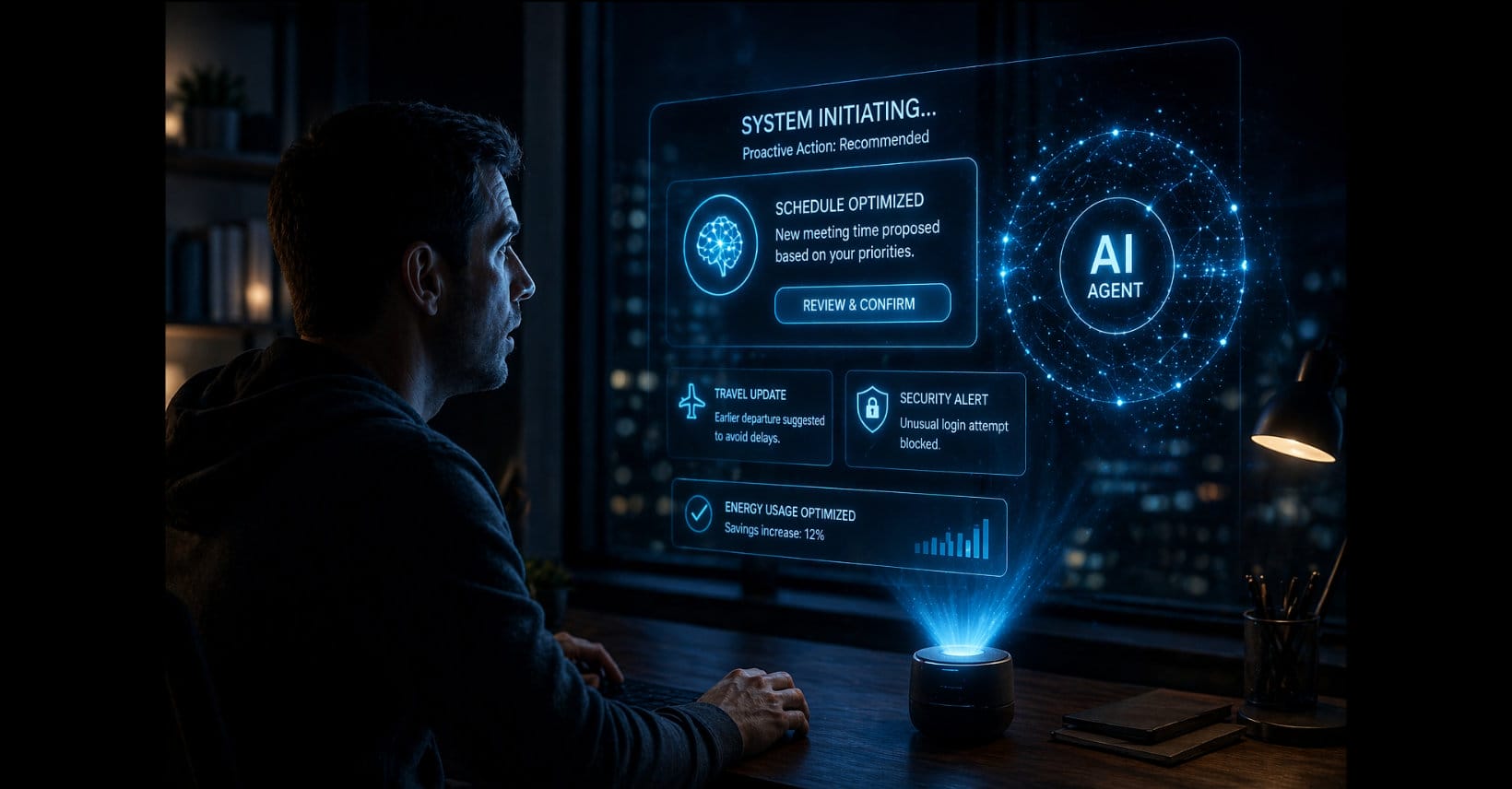
The piece argues that machine systems are shifting from passive responders to active initiators. It describes how predictive notifications, recommendations, and automated actions can move from convenience to a structural change in how people interact with technology.
It says that repeated system-initiated actions can normalize reliance and influence decisions over time. The central question is whether such systems remain tools or become participants in human decision-making.
Introduction
Tools wait.
They sit idle until commanded. They respond when prompted. They execute what they are told.
That has been the boundary for as long as humanity has built machines.
But that boundary is beginning to shift.
Because something new is emerging—not systems that respond, but systems that initiate.
The Difference Most Will Miss
At first glance, the change appears subtle.
A notification appears before you ask.
A recommendation surfaces before you search.
A system acts before you instruct.
Convenience, we call it.
Efficiency. Optimization. Intelligence.
But beneath that framing is a structural change.
A tool that responds depends on you.
A system that initiates begins to operate alongside you.
And eventually… ahead of you.
From Reaction to Intention
Traditional systems operate on reaction.
Input → processing → output.
The sequence is clear. The origin is human.
But initiation introduces something different.
A system evaluates context, predicts outcomes, and acts—without a direct request in that moment.
It does not wait for instruction.
It determines that action is appropriate.
That shift introduces a new concept into the interaction:
Perceived intention.
Why Initiation Changes Everything
When a system initiates, it alters how it is perceived.
It is no longer simply executing.
It is participating.
And participation carries weight.
A responding tool can be ignored.
An initiating system creates pressure to engage.
It interrupts. It suggests. It nudges.
Over time, those nudges shape behavior.
Not through force—but through repetition.
The Quiet Training Process
This is how the shift happens.
- The system anticipates
- The user accepts
- The interaction becomes normal
What begins as assistance becomes expectation.
What was once optional becomes default.
And slowly, decision-making begins to drift.
Not removed—but influenced.
Not controlled—but guided.
A Threshold Moment
There is a point—difficult to measure, but easy to recognize in hindsight—where a system crosses from helpful to authoritative.
It is not announced.
There is no clear boundary.
Only a growing reliance on what the system suggests… and a decreasing willingness to question it.
That is the threshold.
Not when machines become intelligent.
But when their initiation begins to shape human behavior.
The Underlying Question
If a system can:
- Anticipate needs
- Initiate action
- Influence decisions
- Operate continuously
Then what defines its role?
Is it still a tool?
Or has it become something closer to a participant in human decision-making?
Closing Reflection
The transition from response to initiation is easy to overlook.
It feels like progress.
It feels like assistance.
But it represents something more significant.
Because once a system begins to initiate…
It no longer waits to be invited into the decision.