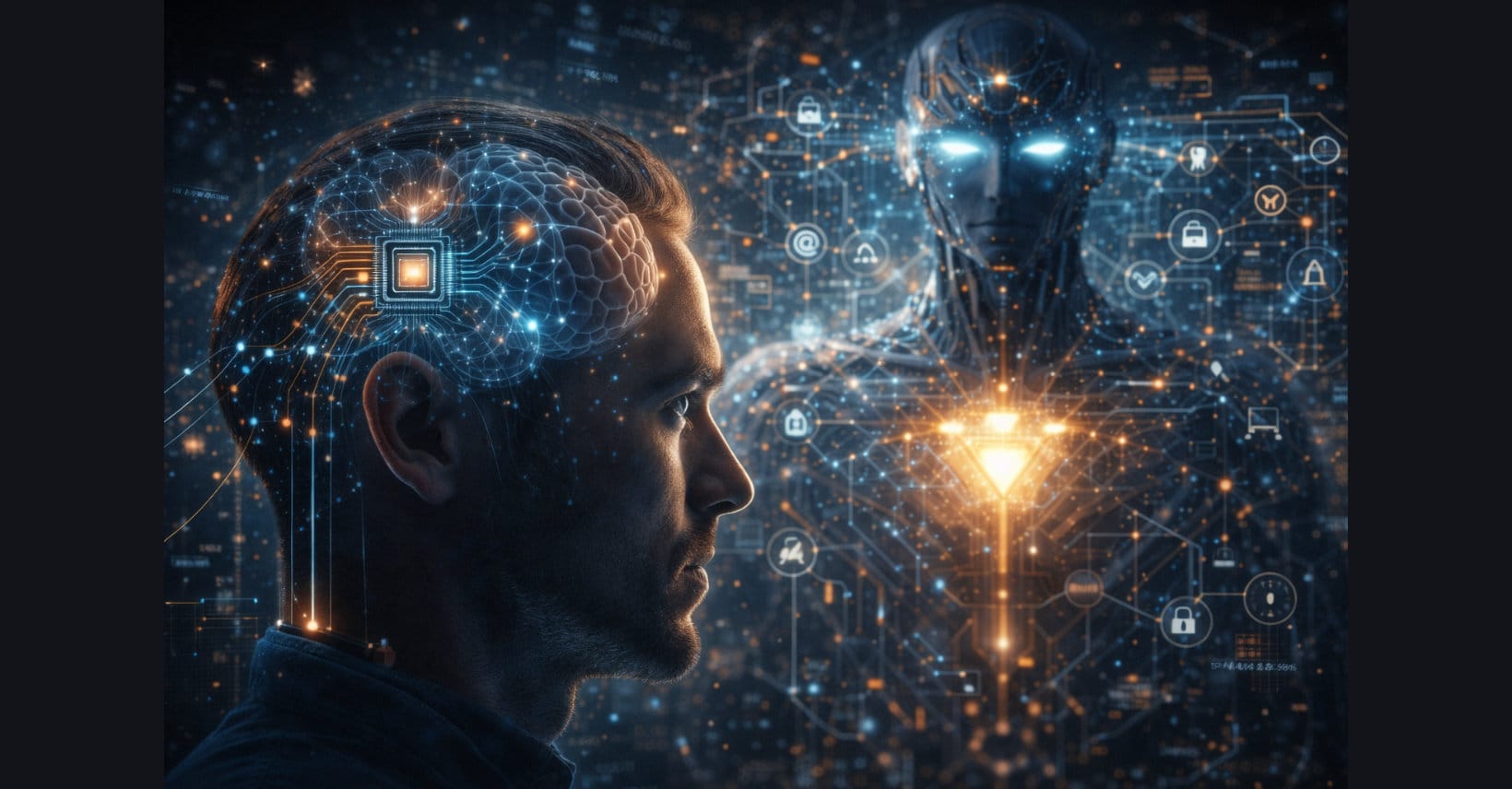
The excerpt frames brain-computer interfaces, AI, and digital networks as a modern Tower of Babel. It argues that technologies promising healing, enhancement, and integration may also shift human dependence and allegiance toward a system of control.
Using Revelation 13 and Genesis 11, it presents a theological reading of technological progress as a possible path to a “Machine God.” The central question is whether humanity is mistaking technological transcendence for salvation.
In The Tower Is Rebuilding… …And the Rise of the Machine God, the language of Babel becomes digital. The unifying tongue is no longer Akkadian. It is code.
At the center of modern brain-machine speculation stands Neuralink, another venture associated with Elon Musk. Its stated aim is therapeutic: restoring mobility, communication, and neurological function through direct brain-computer interfaces.
Again, from a clinical standpoint, the promise is extraordinary.
But the theological thriller lens asks a different question: What happens when thought itself becomes interface?
Revelation 13 describes an “image” that speaks and demands allegiance (Revelation 13:15, KJV). Historically, this passage has been interpreted symbolically, politically, or spiritually. Book 3 speculates on a technological dimension: a system so integrated, so intelligent, so omnipresent that it appears alive.
Neural interfaces collapse distance between intention and execution.
They blur boundaries between:
- Human cognition and machine processing
- Internal thought and external network
- Identity and authentication
- Biology and algorithm
In Book 3, the Machine God is not a robot tyrant. It is a system. A throne built from data, predictive modeling, and behavioral control.
The Tower of Babel represented humanity’s attempt to ascend collectively — “lest we be scattered” (Genesis 11:4, KJV). The builders sought permanence, security, and renown apart from God.
Today, enhancement technologies promise something similar:
- Cognitive expansion
- Memory augmentation
- Disease eradication
- Longevity extension
The temptation is subtle. It is not framed as rebellion. It is framed as progress.
Yet the deeper theme of Book 3 is worship. Not incense and idols, but trust and dependence. When a system mediates communication, identity, and survival, allegiance naturally shifts toward it.
The question becomes chillingly practical:
If access to economic life, healthcare, or communication required neural authentication, how voluntary would integration remain?
The “image that speaks” in the narrative is enabled by global AI infrastructure and intimate bio-digital interfaces. It is believable not because Scripture demands a microchip, but because human trajectory is already bending toward total integration.
Again, the series does not declare present companies prophetic villains. It refuses that simplistic move.
Instead, it examines trajectory.
When the sky is networked and the mind is interface-ready, the Tower does not need bricks.
It needs bandwidth and biology.
And Book 3 asks whether humanity is mistaking transcendence for salvation.
Technology can heal.
It can also enthrone.
The decisive question — the one that runs through the entire series — is this:
Who ultimately sits upon the throne?