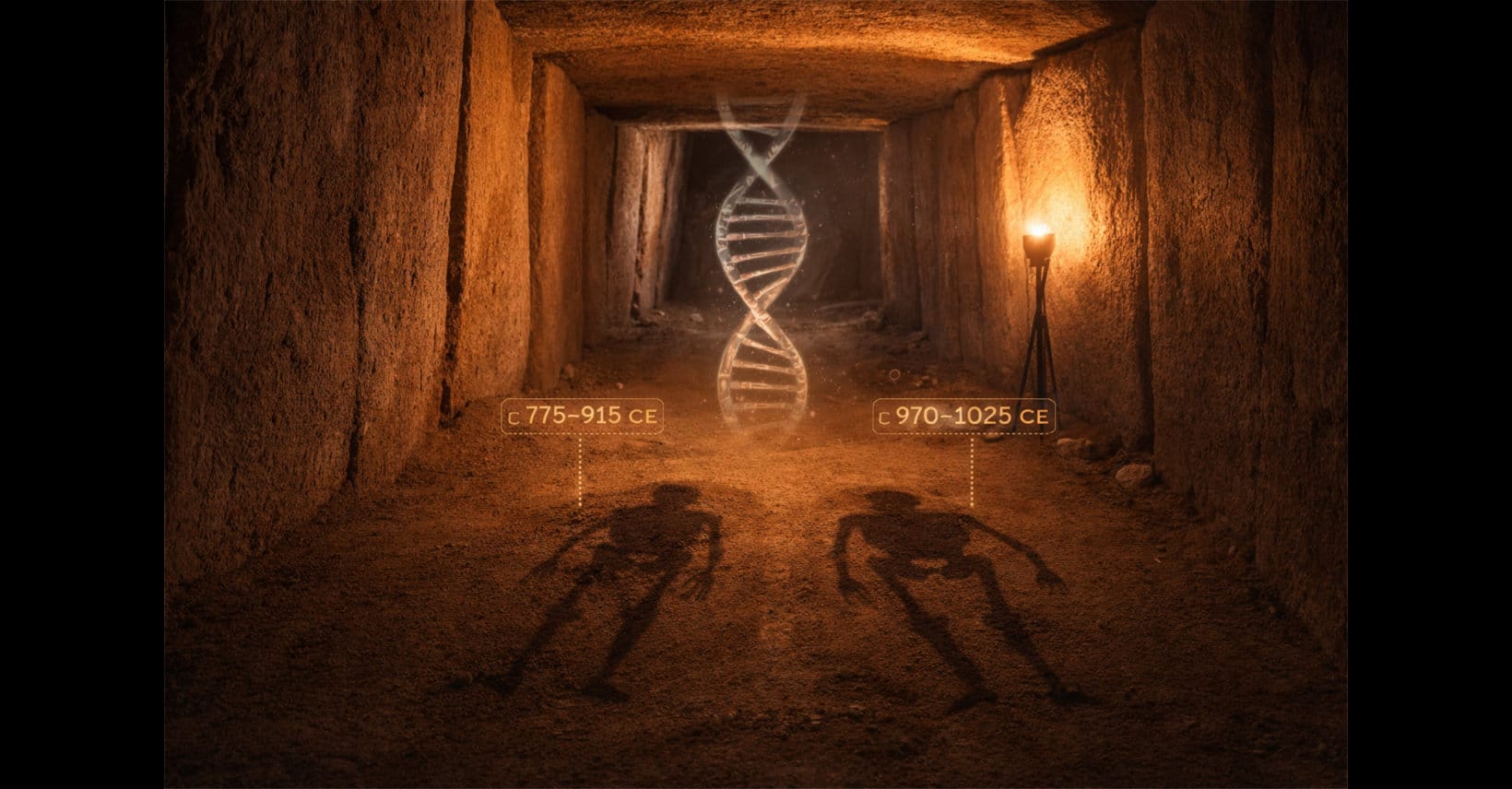
A new analysis of the Menga Dolmen in Andalusia found that two men buried there were interred between the 8th and 11th centuries CE, long after the monument was built in the Neolithic. Radiocarbon dating and degraded DNA methods show the site remained in use rather than being abandoned.
The burials were placed face down along the dolmen’s axis, suggesting later communities deliberately reused the monument and adapted its geometry to new ritual practices. The post argues that the find shows how ancient sites can remain culturally significant across very different historical periods.
The Menga Dolmen in Andalusia, Spain—an enormous Neolithic monument roughly 5,000 years old—was supposed to be a relic of prehistory: an impressive stone structure from a vanished world, left behind as time moved on. Instead, a new scientific analysis has revealed something more unsettling and far more interesting: the monument remained ritually active well into the medieval era.
Two male skeletons discovered there in 2005 were recently studied using radiocarbon dating and highly degraded DNA recovery methods. The results placed these burials not in the Neolithic, but between the 8th and 11th centuries CE—meaning people were intentionally burying their dead at this megalith thousands of years after it was built.
Even the burial details resist easy classification. The men were laid face down, aligned with the dolmen’s axis. The positioning echoes aspects of Islamic burial tradition, yet diverges from typical Islamic burials in the region—suggesting that whoever placed these bodies understood the site’s older geometry and deliberately integrated it into a later cultural practice.
This is exactly the kind of evidence that exposes how fragile our historical “eras” really are. The official story likes clean separations: Neolithic ends, medieval begins, and the past stays politely in its assigned category. But Menga didn’t cooperate. Instead, it functioned like a persistent landmark of power—a physical anchor in the landscape that later societies continued to recognize as significant, even if they no longer understood the original builders.
From the Alien Deception Chronicles perspective, this is what “deception through simplification” looks like. You don’t have to fabricate aliens to distort history—you only have to insist ancient monuments were “abandoned” when they were actually reused, reinterpreted, and reactivated across civilizations.
And that raises the deeper question: what makes a megalithic structure endure not just physically, but culturally? Why did later communities return to it for burial—one of the most symbolically loaded actions a society can take?
Menga behaves less like a tomb and more like a signal tower in time—broadcasting meaning across millennia, pulling humans back into its geometry. The stones remained. The rituals changed. The site kept its grip.
That’s not just archaeology. That’s legacy technology—operating on the human mind.