Papyrus Anastasi I, a 13th-century B.C. Egyptian scribal text, is presented as independent ancient testimony describing unusually tall and formidable warriors in Canaan. The account is compared with biblical references to giant clans such as the Anakim and Rephaim.
The piece argues that these parallels complicate claims that such biblical figures were purely mythical, while noting that the Egyptian text does not explicitly confirm the Nephilim narrative in Genesis. It frames the evidence as suggestive rather than definitive.
For generations, critics of the Bible have argued that the biblical references to giants, the Nephilim, and powerful ancient warrior clans were little more than mythology wrapped in religious storytelling. Yet discoveries from the ancient world continue to complicate that assumption. One Egyptian document in particular—dating back more than 3,300 years—is drawing renewed attention because of its striking parallels to the biblical description of giant peoples inhabiting Canaan.
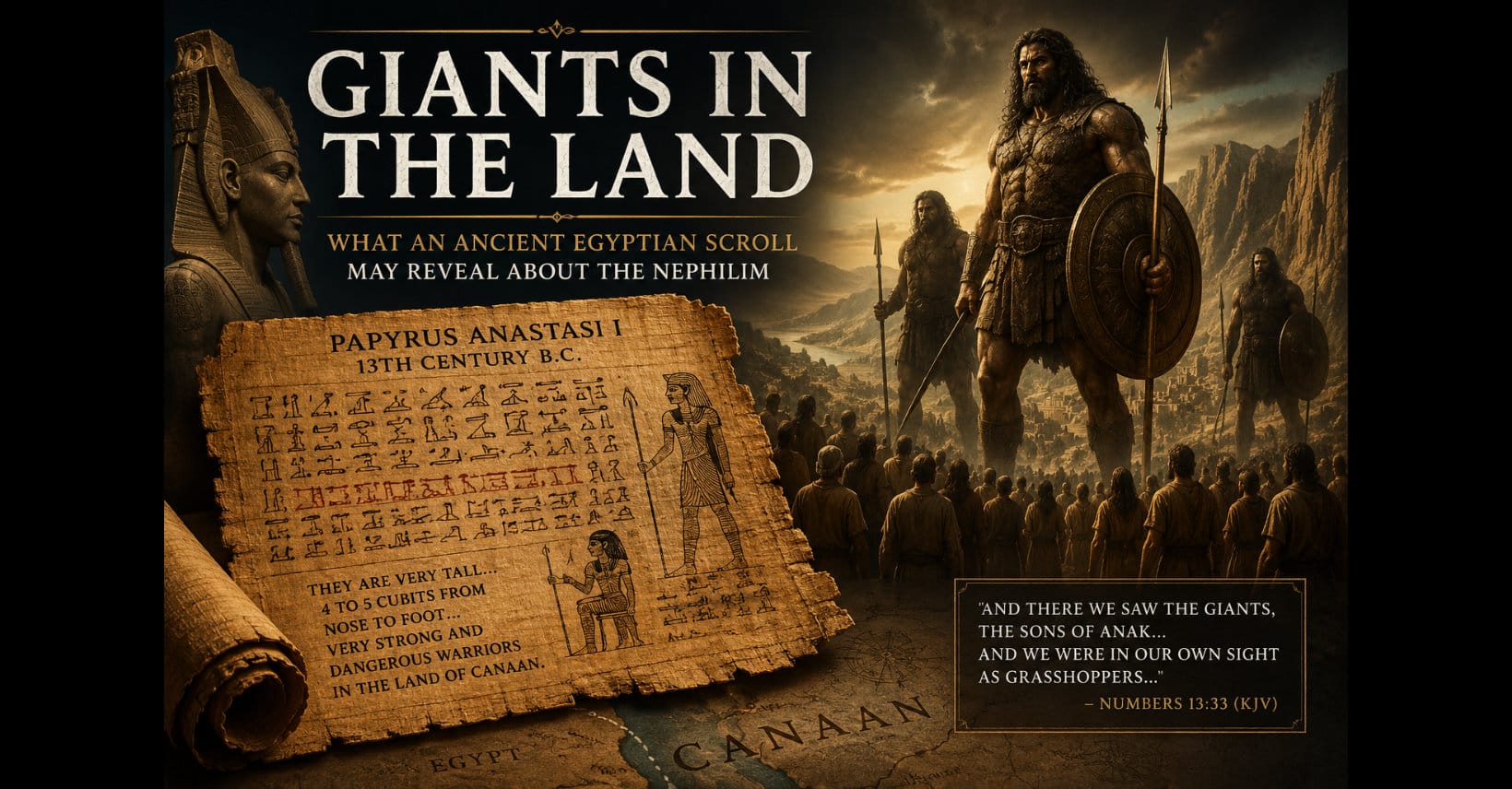
The artifact is known as Papyrus Anastasi I, an Egyptian scribal text dating to the 13th century B.C. and currently housed in the British Museum. While the papyrus is often studied for its military and geographical references, one section has become especially intriguing to historians and biblical researchers alike.
The document describes dangerous travel routes in Canaan inhabited by unusually large and intimidating warriors. According to translations frequently cited by researchers, these men were measured at approximately four to five cubits from nose to foot—roughly seven to eight-and-a-half feet tall by modern estimation. More importantly, these individuals were not presented as mythical beings from legend or folklore. They were treated as real inhabitants of the land and legitimate military concerns.
That detail matters.
The Bible repeatedly describes giant clans inhabiting Canaan before Israel’s conquest of the Promised Land. In Numbers 13:33, the Israelite spies reported:
“And there we saw the giants, the sons of Anak, which come of the giants: and we were in our own sight as grasshoppers, and so we were in their sight.”
Scripture further identifies several giant peoples connected to the region, including the Anakim, Rephaim, and descendants of Anak. Deuteronomy, Joshua, and 1 Samuel all preserve references to these populations, with Goliath becoming the most recognizable surviving example in biblical memory.
Skeptics have long claimed these accounts were exaggerated oral traditions written centuries after the fact. Yet Papyrus Anastasi I originates from an entirely separate civilization—Egypt—and references the same geographical region while describing similarly formidable inhabitants.
This does not “prove” every theological conclusion associated with the Nephilim. Responsible biblical scholarship requires caution. The Egyptian text does not explicitly use the Hebrew term “Nephilim,” nor does it directly confirm the Genesis 6 narrative involving the sons of God and the daughters of men. However, it does provide something significant: independent ancient testimony that unusually tall and fearsome warrior populations were associated with Canaan during the same broad historical era reflected in the biblical record.
For readers of The Alien Deception Chronicles, discoveries like this matter because they reinforce a recurring pattern explored throughout the series: the Bible repeatedly intersects with ancient history in ways modern skepticism often fails to anticipate.
The modern world frequently treats supernatural elements of Scripture as primitive mythology. Yet archaeology continues uncovering fragments of the ancient world that align—sometimes uncomfortably well—with biblical narratives once dismissed as impossible.
The question is not merely whether giants existed.
The deeper question is why so many ancient civilizations preserved overlapping traditions involving powerful hybrid beings, divine rebellions, corrupted bloodlines, and catastrophic judgment.
Genesis 6 remains one of the most debated passages in Scripture precisely because it sits at the intersection of theology, history, and the supernatural. The Nephilim narrative did not emerge in isolation. Echoes of giant clans and extraordinary beings appear across multiple ancient cultures, from Mesopotamia to Canaan and beyond.
From a TADC perspective, this becomes spiritually significant because Scripture warns repeatedly that humanity is vulnerable to deception when it forgets its own history. The ancient world may have understood spiritual realities modern civilization has deliberately buried beneath materialism and technological confidence.
As more ancient records surface, the line between “myth” and “memory” continues to blur.
And perhaps that is what unsettles skeptics the most.
Companion Scriptures:
• Genesis 6:1–4
• Numbers 13:32–33
• Deuteronomy 2:10–11
• Joshua 11:21–22
• 1 Samuel 17:4
• Jude 1:6
• 2 Peter 2:4
Editorial Note: This article discusses speculative theological interpretations consistent with the fictional framework of The Alien Deception Chronicles. The connections explored between ancient texts, the Nephilim, and biblical prophecy are presented as theological inquiry and historical analysis, not dogmatic assertion.