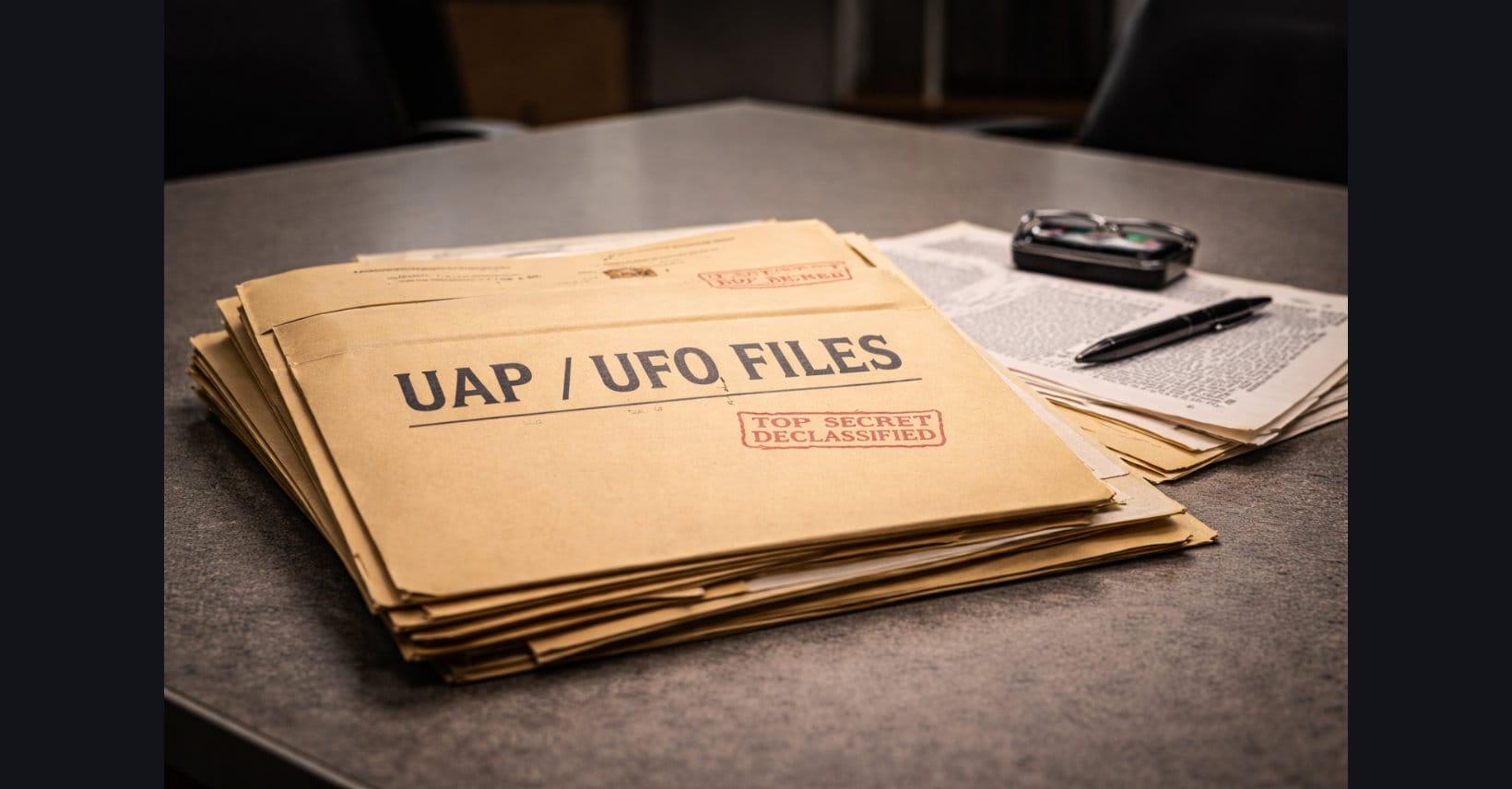
The U.S. government has begun reviewing and releasing classified records related to UAP and possible extraterrestrial life under an executive directive announced in February 2026. The move directs federal agencies to identify records tied to unexplained aerial encounters and to examine information connected to public claims about these phenomena.
The announcement does not confirm alien visitors, but it marks a notable shift toward greater transparency. The release of records may clarify decades of government research and reshape discussion of unexplained aerial phenomena.
In a development that may represent one of the most consequential pivots in modern disclosure history, the United States government — under executive directive — has initiated a review and release of classified files related to extraterrestrial life, unidentified aerial phenomena (UAP), and unexplained aerial encounters. This decision, announced through multiple independent press reports on February 20, 2026, directs federal agencies, including the Pentagon and Department of War, to begin identifying and releasing all government records tied to these subjects.
What distinguishes this move from earlier, more cautious government pronouncements is its explicit acknowledgment of public demand and its mandate to examine “any and all information connected” to UAP and potential extraterrestrial contact. While official statements stop short of confirming the existence of alien visitors, they nevertheless represent a dramatic shift in transparency policy concerning phenomena long relegated to the realms of conspiracy and skepticism.
For chroniclers of the alien enigma, this moment is pivotal. It is the first time that a sitting government has acknowledged — in authoritative language — that the phenomenon of UAP and the historical question of extraterrestrial life warrant systematic review rather than dismissal. The implications are profound: decades of rumor, anecdote, and fringe investigation may soon be supplemented by primary source records from within the institutions that studied them.
At the heart of this shift lies a broader theme central to The Alien Deception Chronicles: the tension between hidden knowledge and official narratives. Whether these released files will contain definitive evidence or simply illuminate aspects of decades‑old research is yet to be seen, but their existence alone signifies a reorientation in how the unexplained is treated by the centers of power.
In the coming weeks and months, as the review progresses and documents begin to surface, this chapter in the ongoing disclosure saga will not only inform public discourse — it will reshape the very terrain on which questions about extraterrestrial contact are debated. The veil, for the first time in a long time, appears to be lifting.