Archaeologists at Panama’s El Caño site uncovered Tomb 3, an elite burial from the 8th–11th centuries AD with gold ornaments, ceremonial objects, and decorated ceramics tied to the Gran Coclé culture. The find offers evidence of advanced craftsmanship and social hierarchy in a pre-Columbian society.
The discovery has also been framed as an example of how striking ancient artifacts can inspire speculation about lost technologies or extraterrestrial influence. Historically, however, it is presented as evidence of human ingenuity and complex cultural traditions in ancient Central America.
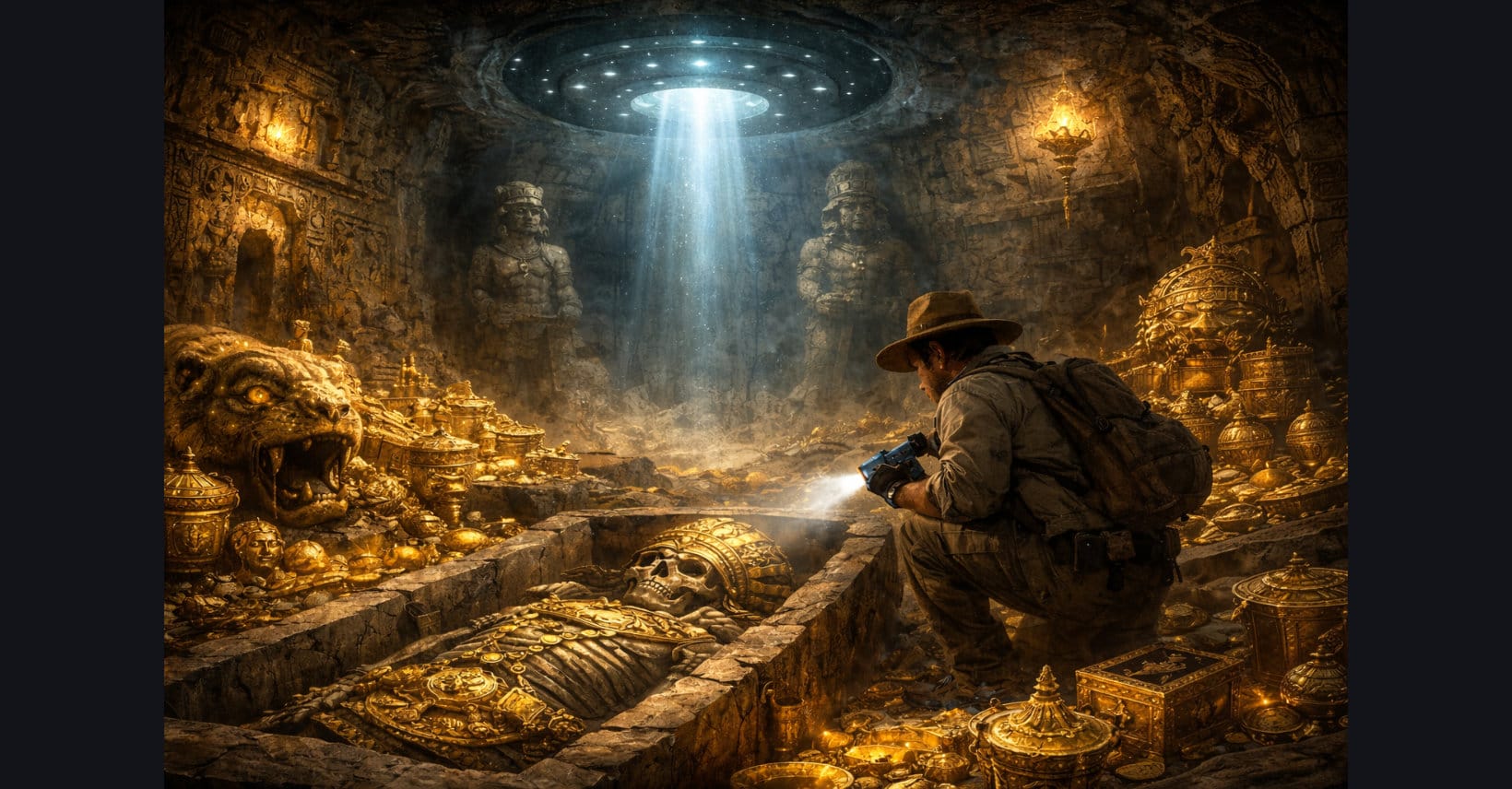
Archaeologists working at the El Caño site in Panama recently uncovered an extraordinary tomb containing gold ornaments, ceremonial objects, and the remains of an elite individual buried more than a thousand years ago. The burial, known as Tomb 3, dates to roughly the 8th–11th centuries AD and contained intricate gold chest plates, arm cuffs, ear ornaments, and decorated ceramics associated with high social status in the ancient Gran Coclé culture.
Discoveries like this provide rare insight into the power structures and technological capabilities of ancient civilizations in Central America. The craftsmanship evident in the gold artifacts demonstrates advanced metallurgical knowledge, including alloying, shaping, and ceremonial symbolism embedded within the designs. Archaeologists believe the tomb belonged to a powerful political or religious leader, suggesting a complex and highly organized society that flourished long before European contact.
Finds of this nature often trigger speculation about lost technologies or vanished civilizations whose achievements rival or surpass those commonly attributed to the ancient world. In popular culture, such discoveries frequently become part of broader narratives proposing extraterrestrial influence on early human societies. Gold artifacts in particular have played a central role in many ancient‑alien theories, which claim advanced beings interacted with early cultures or demanded precious metals for unknown technological purposes.
From a historical perspective, however, the tomb likely reflects the ingenuity of human artisans and the cultural traditions of the Gran Coclé people. Yet the mystery surrounding ancient gold-working traditions still fuels imagination. How did these societies develop such complex metallurgical techniques? How did knowledge spread across vast regions of the Americas without modern communication networks?
Within the framework of The Alien Deception Chronicles, discoveries like the El Caño tomb illustrate how legitimate archaeological findings can become the foundation for sweeping extraterrestrial narratives. When extraordinary craftsmanship appears in ancient contexts, it invites questions that sometimes lead observers to extraordinary conclusions.
Whether interpreted as evidence of forgotten human sophistication or something more speculative, each new discovery expands the story of humanity’s past—and reminds us how much remains hidden beneath the soil of ancient civilizations.