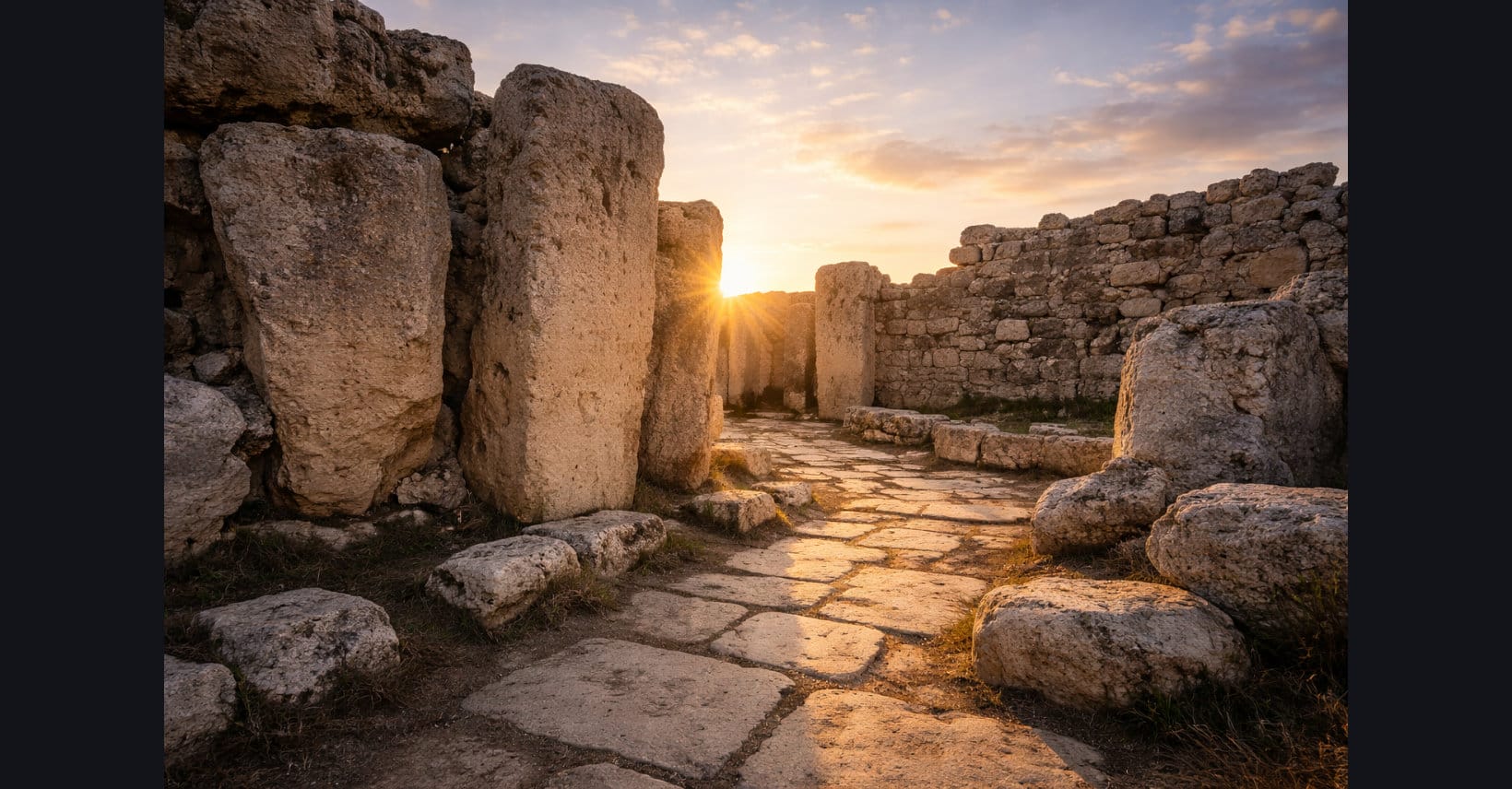
Malta’s megalithic temples, including Ħaġar Qim, Mnajdra, Tarxien, and Ġgantija, are presented as some of the world’s oldest free-standing stone structures. The post highlights their age, scale, and architectural sophistication, along with claims that some alignments may relate to celestial patterns.
It contrasts mainstream archaeological views of Neolithic builders with alternative interpretations that suggest lost prehistoric knowledge. The absence of written records is framed as part of the mystery, leaving open questions about the temples’ purpose and the capabilities of their builders.
Amidst the azure waters of the Mediterranean lies an archaeological landscape that quietly defies easy categorization. The megalithic temples of Malta — including Ħaġar Qim, Mnajdra, Tarxien, and the towering Ġgantija complex — date back to at least 3600–2500 BC, making them some of the oldest free‑standing stone structures on Earth. Recent commentary by archaeologists and alternative thinkers alike has reignited debate over just how and why these enormous stone edifices were constructed.
What makes Malta’s megaliths compelling to readers of The Alien Deception Chronicles is not simply their age, but their architectural sophistication and ostensible alignment with celestial phenomena. Some researchers suggest that certain temple orientations correlate with star positions, hinting at astronomical intent in their design. Others push the boundaries further, proposing that such alignments reflect lost bodies of prehistoric knowledge about the heavens — knowledge that may have originated outside the conventional trajectory of human cultural evolution.
To mainstream archaeology, these structures represent the ingenuity of Neolithic islanders; to the alternative narrative, they are signposts — silent yet deliberate — pointing to knowledge lost in the mists of time. The absence of written records about the builders compels us to read meaning into the stones themselves, encouraging interpretations that stretch beyond technology and culture into realms more cosmic.
Whether one regards Malta’s temples as simple ritual sites or as encoded astronomical platforms, their existence challenges linear historical assumptions. Their age, monumental scale, and enigmatic symbolism resonate with enduring questions about human potential in prehistoric eras and the possibility that civilizations long buried beneath millennia may have possessed insight that modern science is only beginning to grasp.
For Chronicle audiences, Malta’s megalithic legacy serves as both a reminder and a provocation: the deeper we dig into the past, the more it invites us to question not just how ancient people built their world, but why — and what knowledge might still be hidden in plain sight.